
Skydio Army Drone Order: A Strategic Acquisition Signal
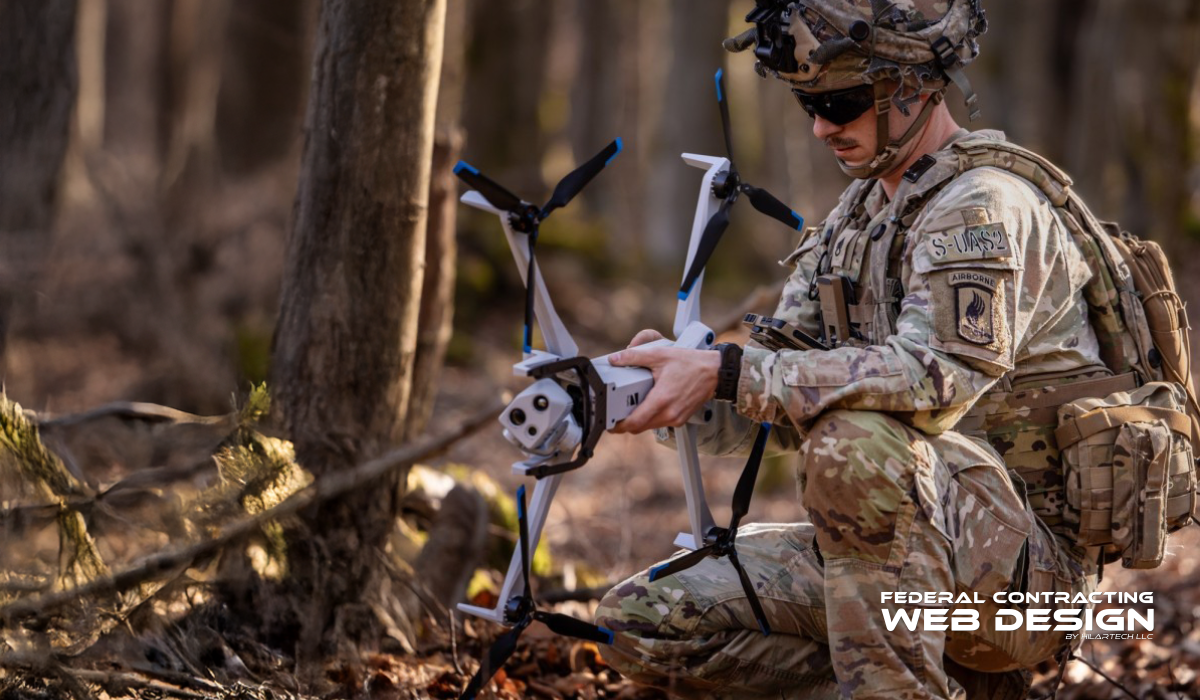
BLUF: This Skydio buy is not just a drone story. It is an acquisition signal. The Army just showed industry what gets funded fast at scale: proven battlefield relevance, fast operator adoption, resilience in contested environments, commercial production capacity, and a procurement path that reduces friction. If you want to team or posture for acquisitions like this, stop selling isolated hardware and start presenting yourself as part of a capability stack the Army can field, sustain, and scale now.
This is bigger than a $52 million drone order
One correction matters at the start. Skydio’s official release says the order is for more than $52 million and over 2,500 X10D drones, not “nearly 3,000,” and says it moved from bid to award in less than 72 hours. That speed is the real headline. It tells you the Army did not see this as a science project. It saw it as a ready answer to an urgent operational need.
The Army had already been fielding X10D through its Short Range Reconnaissance pathway and Transformation in Contact effort. In December 2025, the Army said X10D was being procured under SRR and used to equip Transformation in Contact units at the platoon level for reconnaissance, surveillance, and target acquisition. The Army also said initial X10D fielding began in April 2025 under an urgent operational request. This order did not come out of nowhere. It sits on top of testing, operator feedback, and rapid fielding already underway.
That matters because Transformation in Contact is built around getting new technology into soldiers’ hands fast, letting them experiment, and using commercial off the shelf products to accelerate readiness on a modern battlefield. In plain English, the Army is shrinking the distance between operational pain and procurement action.
Why Skydio fit the moment
The X10D aligns with the battlefield problem the Army is trying to solve. Skydio positions it as an EW resilient platform that can maintain connectivity under GPS and communications jamming, return using vision only, switch channels with a multiband radio, and operate in GPS denied or spoofed environments using visual inertial odometry and vision based reference points. It is also on the Blue UAS Cleared List and available through GSA and DLA schedules, which lowers procurement friction.
The Army’s own description of SRR reinforces that fit. It ties the system to real time reconnaissance, target acquisition, ATAK and Uncrewed Vehicle Control integration, faster decision making, and improved soldier survivability. That is why this order is strategically important. The drone is not the point. The point is tactical ISR that plugs into the fight and shortens the sensor to shooter cycle.
Skydio also benefited from a dual use advantage. The company says its defense capability was strengthened by self funded research and civilian production scale. Whether every performance claim holds up over time will be judged in the field, but the procurement outcome already tells us the Army valued mature production, rapid delivery, and operational relevance over a slower, cleaner, more traditional acquisition rhythm.
The real HILARTECH read
Here is the HILARTECH spin.
Large defense acquisitions increasingly reward companies that look like low friction capability partners, not interesting technology vendors.
That sounds simple, but most firms still posture the wrong way. They lead with platform specs, generic “mission ready” copy, and broad s. The Army’s current behavior says that is not enough. The winners are the companies that can show five things clearly:
- Operational fit
- Integration into real unit workflows
- Production at scale
- A procurement path that does not slow the government down
- A teaming structure that closes capability gaps fast
The Army’s acquisition reforms make this even more obvious. In late 2025, the Army created six Portfolio Acquisition Executives, including Maneuver Air, and said each PAE would own the full capability area across requirements, contracting, acquisition, testing, sustainment, and more. The Army also said each PAE would have an embedded Senior Contracting Official to move faster and create clearer entry points for industry. That is a major signal to primes and subs alike. You are not just selling into a program anymore. You are posturing into a capability portfolio.
What this means for teaming
If you want to win around buys like this, do not show up saying, “We also build drones.”
Show up saying, “We remove one critical source of friction from scaling tactical UAS in contested environments.”
That is a completely different posture.
The Army’s open ended UAS Marketplace makes this even clearer. Its stated areas of interest include not only air vehicles and payloads, but also intelligence and electronic warfare sensors, tactical communications, soldier equipment, simulation, supply chain and logistics, installation support, additive manufacturing, autonomous software, command and control, launched effects, and production at scale. That is not a market for one company. That is a market for team architecture.
So the smart teaming question is not, “How do I become the prime on a drone buy?”
The smart teaming question is, “Where am I indispensable inside the capability stack?”
For many companies, the better answer is one of these:
- Payload integration
- Edge processing and autonomy software
- ATAK and C2 integration
- EW resilience enhancements
- Training and simulation
- Depot repair and sustainment
- Battery, charging, and field support
- Supply chain assurance and domestic manufacturing depth
- Data exploitation and target handoff workflows
That is where smaller firms become hard to ignore.
How primes should read this
For primes, this buy is a warning shot.
The government is moving toward faster capability centric procurement. If your teaming model is slow, closed, and optimized around controlling every component, you will become the bottleneck. And bottlenecks get cut out.
The better prime posture is to look like an integration and scale engine. Own the contracting, fielding, quality control, cyber posture, sustainment plan, production readiness, and user adoption. Then build a partner bench that fills the technical seams the Army actually cares about. The prime that wins the next wave will not be the one with the prettiest brochure. It will be the one that reduces the government’s time to operational effect.
How subs should read this
For subs, this is not a signal to chase everything. It is a signal to sharpen.
You need one page on your site that answers four questions in under a minute:
- What exact battlefield problem do you solve
- Where do you plug into the kill chain or support chain
- How fast can you integrate with existing systems
- Why are you safer to buy than the next vendor
If you cannot answer those four questions cleanly, you are not postured for large acquisitions. You are still marketing.
The website lesson most defense firms miss
This is where HILARTECH has an edge.
A company website for this market should not read like a general catalog. It should function like an acquisition positioning system.
That means pages built around mission threads, capability portfolios, team roles, and field outcomes. It means dedicated sections for contested environment performance, integration pathways, interoperability with government workflows, production readiness, compliance posture, and sustainment depth. It means proof that you understand how the Army is organizing demand, not just how your product works.
For a company trying to team into Maneuver Air or adjacent UAS work, the site should make it easy for a government stakeholder or prime partner to understand:
- where you fit
- how you de risk integration
- how you accelerate fielding
- how you support scale
- how you strengthen the industrial base
That is the difference between being “interesting” and being selectable.
What companies should do now
First, map your offer to a capability area, not just a product category. In this case, that means thinking in terms of Maneuver Air, tactical ISR, contested environment survivability, and sensor to shooter support.
Second, build a teaming narrative around friction removal. Do not say you are innovative. Say you reduce fielding time, simplify integration, harden survivability, or expand production resilience.
Third, tighten your acquisition pathways page. If you are Blue UAS aligned, on GSA, on DLA, in OTA ecosystems, or ready for CSO style submissions, make that visible and easy to understand. The easier you are to buy, the more relevant you become.
Fourth, create a partner facing page, not just a customer facing page. The next large acquisition may depend on whether a prime sees you as a clean fit in 30 seconds.
Fifth, stop writing generic defense copy. The Army is telling industry exactly where it is going. Your positioning needs to sound like you are already there.
Bottom line
Skydio did not just win a big order. It aligned to a new buying reality.
The Army wants systems that are usable now, resilient in the fight, easy to field, connected to operational workflows, and backed by companies that can scale. The firms that win around these acquisitions will be the ones that understand that the contract is only the surface event. Underneath it is a deeper shift in how capability is defined, bought, and integrated.
And that is the real HILARTECH takeaway:
In this market, teaming is not networking.
Posturing is not branding.
Selection starts long before the RFP.
Sources
- https://www.skydio.com/blog/u-s-army-usd52-million-order-skydio-x10d
- https://www.army.mil/article/289642/army_awards_skydio_inc_contract_for_tranche_2_short_range_reconnaissance_systems
- https://www.army.mil/article/288957/army_revolutionizes_acquisition_process_to_deliver_warfighting_capabilities_faster
- https://defensescoop.com/2026/03/13/army-uas-marketplace-drone-technology-driscoll-hegseth/
- https://sam.gov/workspace/contract/opp/f71bdf94c86846379f21abc2d73a7b54/view
- https://www.skydio.com/x10d
Strategic Implications
Operational Fit: The Army is shrinking the distance between operational pain and procurement action.
Integration: The drone is not the point. The point is tactical ISR that plugs into the fight and shortens the sensor to shooter cycle.
Procurement Path: The Army valued mature production, rapid delivery, and operational relevance over a slower, cleaner, more traditional acquisition rhythm.
Related Intelligence
Financial Analysis
The Hidden Fee Game Behind GoDaddy, Hostinger, Wix, and Similar Platforms
Operational Trust
The Other Guys vs HILARTECH Hosting
Strategic Analysis
The Hard Truth Behind the FY27 Defense Budget Surge
Operational Trust
The Defense Contractor Website Test No One Talks About